
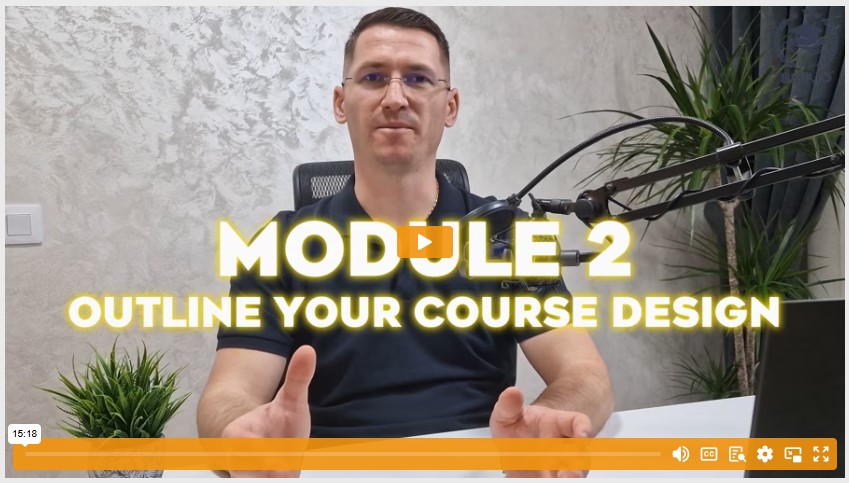
Module 2 – Outline Your Course Design
Introduction
Welcome back, and congratulations on completing Module 1! In this next step of our Create an Online Course A–Z Masterclass, we'll focus on course design—the foundational roadmap that ensures your students experience a clear, engaging, and results-oriented learning journey.
Today, free information is everywhere. Anyone can open a browser and find tips on just about any subject. So, why do learners still invest in online courses? It's not just about the raw information you provide—it's how you organize and present that information, and how you guide learners to apply it in real life. By the end of this module, you'll understand how to craft a blueprint that transforms your course from a pile of random facts into a purposeful, step-by-step path toward success.
Section 1: Why a Well-Designed Course Matters
1.1 More Than Just Information
With over a billion websites offering free content, students crave structure and guidance more than ever. When you can offer an organized, step-by-step roadmap, you're giving learners exactly what they need:
- Relevant Content – Instead of sorting through online clutter, they get curated material that solves a specific problem.
- Logical Organization – A structured flow that helps them build skills progressively, minimizing frustration and confusion.
- Motivation & Support – Opportunities for interaction, feedback, and encouragement that keep them engaged and on track.
Best Practice Example:
Consider popular language-learning apps (like Duolingo or Babbel). While you can find free grammar resources online, these apps succeed because they guide users through bite-sized, sequential lessons and gamify the process to maintain motivation.
1.2 The Shortcut to Results
A well-designed course offers a shortcut—saving learners from piecemeal research and common pitfalls. Your role as an instructor is to synthesize the knowledge they need and deliver it in a way that's both enjoyable and impactful.
Section 2: Key Elements of Effective Course Design
2.1 A Clear Pathway
Think of your course like a well-planned road trip. Each module is a milestone, and every lesson brings students closer to the final destination. By the end of the journey, they should have mastered a cohesive set of skills.
- Tip: Keep modules to a manageable number (4–5 core modules) so students can track their progress without feeling overwhelmed.
2.2 High-Quality Content
Avoid fluff. Include only what learners need to achieve the course goal—the less they have to sift through irrelevant details, the faster they'll see results.
- Example: If you're teaching "Instagram Marketing for Small Businesses," focus on content that directly helps them grow and convert leads via Instagram. Skip the generic social media history lesson unless it's crucial to understanding the platform.
2.3 Multiple Learning Modalities
Everyone learns differently. Some people prefer reading, some thrive on video, and others love hands-on projects.
- Mix It Up: Combine written guides, slide-based lectures, short videos, audio lessons, and interactive quizzes.
- Result: By appealing to various learning styles, you'll boost engagement, retention, and overall satisfaction.
2.4 Interaction & Engagement
Passive learning often leads to low completion rates. To keep students active, incorporate:
- Discussions: Encourage real-time or asynchronous conversation through forums or chat groups.
- Group Projects: Foster collaboration, allowing students to learn from each other's experiences.
- Live Q&A Sessions: Offer regular touchpoints for clarifying doubts and building community.
Section 3: Step 1 – Identify & Write Your Course Goal
Your course goal is the guiding star for everything you'll develop. It answers the question:
"What will my students be able to do by the end of this course, and why does it matter?"
3.1 Aligning the Goal With Real Needs
A powerful course goal isn't just about covering topics; it's about transforming your students' current situation.
- Ask Yourself:
- What pressing problem are my learners facing?
- How will this course provide a solution or significant improvement?
3.2 Making It Tangible
If your goal is too broad—e.g., "Become better at public speaking"—narrow it down. A more actionable version might be:
"By the end of this course, you'll be able to craft a compelling 10-minute presentation and deliver it confidently to a live audience."
This specificity appeals to students because they can visualize exactly what they'll accomplish.
Section 4: Step 2 – Create Your Learning Objectives
Learning objectives break down your overarching goal into smaller, measurable milestones.
4.1 Use Action Verbs
Words like "create," "design," "implement," and "evaluate" show a clear, observable skill or behavior.
- Avoid: "Understand," "know about," "learn about."
- Use: "Compose a 5-step marketing plan," "Analyze financial statements," "Outline a nutrition plan."
4.2 Good vs. Bad Objectives
- Bad Objective: "By the end of this module, you'll understand the basics of project management."
- Good Objective: "By the end of this module, you'll be able to draft a simple project timeline and assign tasks using a standard project management template."
Clear objectives also help you structure assessments and activities that align directly with those objectives.
Section 5: Step 3 – Outline Your Course
Now it's time to shape the overall flow of your course.
5.1 Choose 4–5 Core Modules
Think of each module as a major milestone on your learners' journey.
- Example (Fitness Course):
- Setting Baseline Measurements
- Understanding Macronutrients
- Building a Workout Routine
- Tracking Progress & Adjusting Plans
- Maintaining a Healthy Lifestyle Long-Term
5.2 Break Modules into 3–5 Steps
Divide each module into smaller lessons or "mini-topics." Keep it straightforward:
- Example:In "Building a Workout Routine," you might have lessons on:
- Determining Workout Frequency & Duration
- Selecting Exercises for Different Muscle Groups
- Planning Rest & Recovery
5.3 Stay Goal-Focused
Ask yourself if each step contributes to the final course goal. If it doesn't, consider removing or postponing it to a bonus module or advanced course.
- Pro Tip: If you end up with 8+ modules, you might be packing too much into a single course. Splitting it into a beginner and advanced track can help maintain clarity.
Section 6: Step 4 – Create Your Learning Activities
Well-designed activities bridge the gap between theory and practice.
6.1 End-of-Module Activities
- Examples:
- Quizzes to test retention
- Worksheets to summarize key takeaways
- Reflection prompts to help students connect concepts with real life
6.2 Real-World Application
Encourage learners to immediately put their new skills into action. This could mean writing a short blog post if you're teaching content marketing or drafting a mock budget if you're teaching personal finance.
6.3 Variety is Key
Incorporate different types of activities:
- Quizzes for quick knowledge checks
- Case Studies for deeper analysis
- Peer Reviews for collaborative learning
A diverse approach keeps students mentally engaged and reinforces learning from multiple angles.
Section 7: Step 5 – Build More Interaction & Engagement
Interaction is the secret ingredient to high completion rates and memorable experiences.
7.1 Community & Forums
Create a private space—like a Facebook Group, Slack Channel, or Mighty Networks community—where students can ask questions, share successes, and support each other.
- Best Practice: Assign "community guidelines" to keep discussions positive and on-topic.
7.2 Live Sessions
Nothing beats real-time interaction for boosting motivation. Schedule:
- Webinars: Cover advanced tips or host guest experts.
- Q&A Sessions: Address common pitfalls and individualized struggles.
7.3 Multimedia Approach
---------- your core lessons with infographics, short video explainers, and audio podcasts. These extra materials keep things fresh and cater to different learning preferences.
Section 8: Step 6 – Build Accountability
8.1 Progress Check-Ins
Automated or personal emails after each module can:
- Congratulate students on finishing a section
- Highlight upcoming topics
- Encourage them to ask questions in your community
8.2 Accountability Partners
Pair students together so they can hold each other accountable for completing tasks and share progress updates. This peer pressure (in a good way!) often increases follow-through.
8.3 Post-Course Support
Some of your best students might want to keep learning from you or each other. Keep a "graduates" community or offer a follow-up coaching program to maintain momentum and loyalty.
Action Steps (Call-to-Action)
Before moving on to Module 3, take a few minutes to apply these design principles:
- Write a Concise Course Goal
- Clearly define what problem your course solves and what students will be able to do.
- Create Specific, Measurable Learning Objectives
- Use action verbs and tie each objective to your final goal.
- List Your Main Modules
- Identify 4–5 core modules that lead students logically from start to finish.
- Sketch out the mini-steps or lessons in each module.
- Plan Engagement & Interaction
- Decide where and how your students can interact with you and each other.
- Consider adding a live session or a community platform.
- Establish Accountability
- Pick at least two strategies (progress check-ins, accountability partners, or post-course support) to keep learners on track.
Conclusion
Fantastic work on Module 2! You now have the blueprint for designing your online course—everything from setting clear goals to outlining modules and creating interactive learning activities. This thoughtful structure is what sets a truly effective online course apart from random tutorials or scattered blog posts. You're well on your way to delivering a transformative learning experience that keeps students motivated, engaged, and excited to achieve their goals.
Up next, in Module 3, we'll explore how to develop compelling content. We'll cover creating videos, quizzes, downloadable resources, and other materials to enhance learning and retention. Get ready to dive into the practical side of content creation, where you'll turn your outline into actual lessons that bring your vision—and your students' success—to life!
See you in Module 3!


